How Ultrasonic Obstacle Avoidance Sensor Help with Improving the Working Efficiency of Lawn Mowing Robots
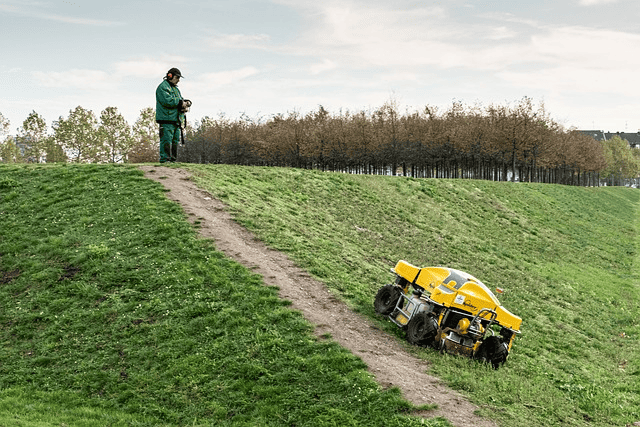
1. Deifnition of Lawn Mowing Robot
2. Working Principle of Lawn Mowing Robot

3. Types of Lawn Mowing Robot
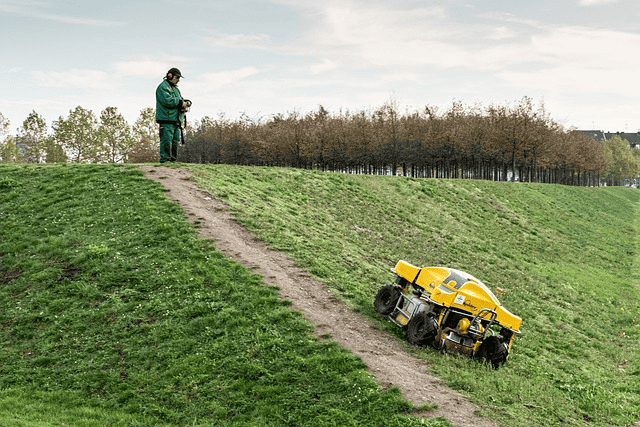
(1) Physical Boundary Lawn Mower
This type relies on invisible boundary wires for navigation, which need to be installed in advance. Users can customize the mowing range and enable the robot to bypass obstacles and restricted areas such as gardens and flower beds.
The lawn boundary wire is generally a thin iron wire wrapped with PVC sheath, with both ends connected to the robot charging station. It can be laid freely in any shape to enclose the entire lawn area.
The charger transmits weak electric current through the boundary wire, forming a magnetic field around the designated working area.
Built-in sensors inside the robot can sense proximity to the boundary. When approaching the wire, the magnetic field sends out signals to prompt the robot to turn around and continue mowing.
The wires outside the lawn generate reverse magnetic fields. Once the robot strays out of the preset range, the system will detect the abnormality instantly and send alerts via the management APP.
Higher risks of boundary deviation may occur on steep slopes, during power outages, or when the boundary wire is damaged or the robot sensor malfunctions.
(2) Virtual Boundary Lawn Mower
It requires no physical boundary wires to limit its moving range. Instead, it adopts sensors and machine learning technology to identify boundary ranges and realize fully autonomous operation without wired layout.
Virtual boundary positioning technologies vary by manufacturers, most of which apply GPS, Bluetooth beacons and machine learning algorithms for accurate navigation. All virtual boundary mowers are equipped with sensors to identify physical landmarks, obstacles and terrain changes.
When the courtyard landscape is adjusted, the working boundary of the robot can be updated accordingly. Supported by AI and machine learning, the robot is capable of continuous learning and automatic adaptation to the surrounding environment.
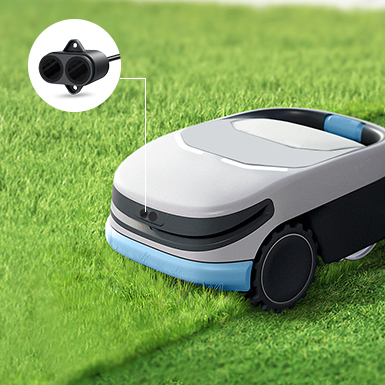
4. Core Component of Lawn Mowing Robots——Ultrasonic Obstacle Avoidance Sensor
Module DYP-L06 Meets LPG Liquid Level Detection Requirements
DYP New Product DYP-SG01 Solves Municipal Garbage Overflow Management Challenges